-

Your Codebase Is Drifting Toward Heat Death: The Physics of Technical Debt, and the Engineer as a Source of Negentropy
Technical debt isn’t debt—it’s entropy. Untouched systems rot anyway; order is a flow, not a stock; refactoring can only relocate complexity, never destroy it. The engineer is the one who keeps injecting negentropy.
-

How Git Workflow Changes in the AI Era: When Code Is No Longer “Typed Line by Line”
AI coding assistants have made code production an order of magnitude faster, yet most Git workflows still assume code is written by humans. This article argues that Git workflow must evolve from “recording code written by humans” to “recording code verified by humans.” It explores three shifts: commit granularity should be measured by verifiable intention…
-

The Harder You Look, the Less It’s There: Heisenbugs and the Observer Effect in Debugging
A bug that vanishes the moment you observe it isn’t bad luck–your observation is rewriting the result. This piece breaks down the four root-cause families of Heisenbugs, explains why traditional debugging is structurally doomed against them, and shows how to shift from “real-time intervention” to “post-mortem non-invasive forensics.”
-
Bugs Written by AI Look Like Correct Code: An Epistemic Rewrite of Debugging
For decades, every debugging methodology has rested on an assumption nobody ever said out loud: behind every line of code stands a person who knows why it exists. The assumption is so natural that nobody thinks of it as an assumption. You open an unfamiliar function and by default trust that the naming reflects intent,…
-

From “500 Requests a Month” to a Token Ledger: What GitHub Copilot’s Pricing Shift Really Means
In June 2025, Cursor replaced its individual plan’s “500 requests per month” cap with a token ledger backed by a pool of API credits. Less than a year later, on June 1, 2026, GitHub announced that Copilot would move its entire product line to the same accounting model. Two products, two different positions in the…
-

Simplicity Is Not a Junior Skill
The industry prices complexity as seniority and simplicity as a junior trait. That sign is backwards. Complex systems arrive almost by default. Keeping one simple as it grows is the harder skill, and promotion, resumes, and design reviews systematically punish it. This is not taste. It is a mispriced engineering ability.
-
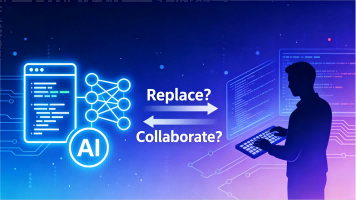
After the AI Coding Boom: Will Programmers Really Be Displaced En Masse?
For the past two years, the debate over the fate of programmers has been dominated by two camps. One insists that code is being “eaten” by large language models, and that the programming profession will soon be automated the way assembly-line work once was. The other is more sanguine, framing AI as merely the next…
-

Is There Still a Point to Building a Personal Blog in the Age of AI?
I’d been meaning to start my own blog for ages. I did set one up, once, but never really invested in it. This past Spring Festival holiday, with a rare stretch of free time on my hands, it struck me that the server I’d been paying for had been sitting idle for far too long.…
-

Code Is Turning from an Asset into a Liability
For decades code counted as an asset because it was scarce: an engineer and several hours per line. AI dropped that cost to an API call. Once code is cheap to generate, another line is often another debt the team must still understand, test, and carry. The books have not caught up.
-

The Friction That Was Stolen
People say AI is making programmers lazy. Lazy is a choice you can still reverse. What is disappearing is the loop that grows a programmer: getting stuck, staying there, and coming out understanding the system. You can ship more and still lose that loop. No tool puts the friction back.